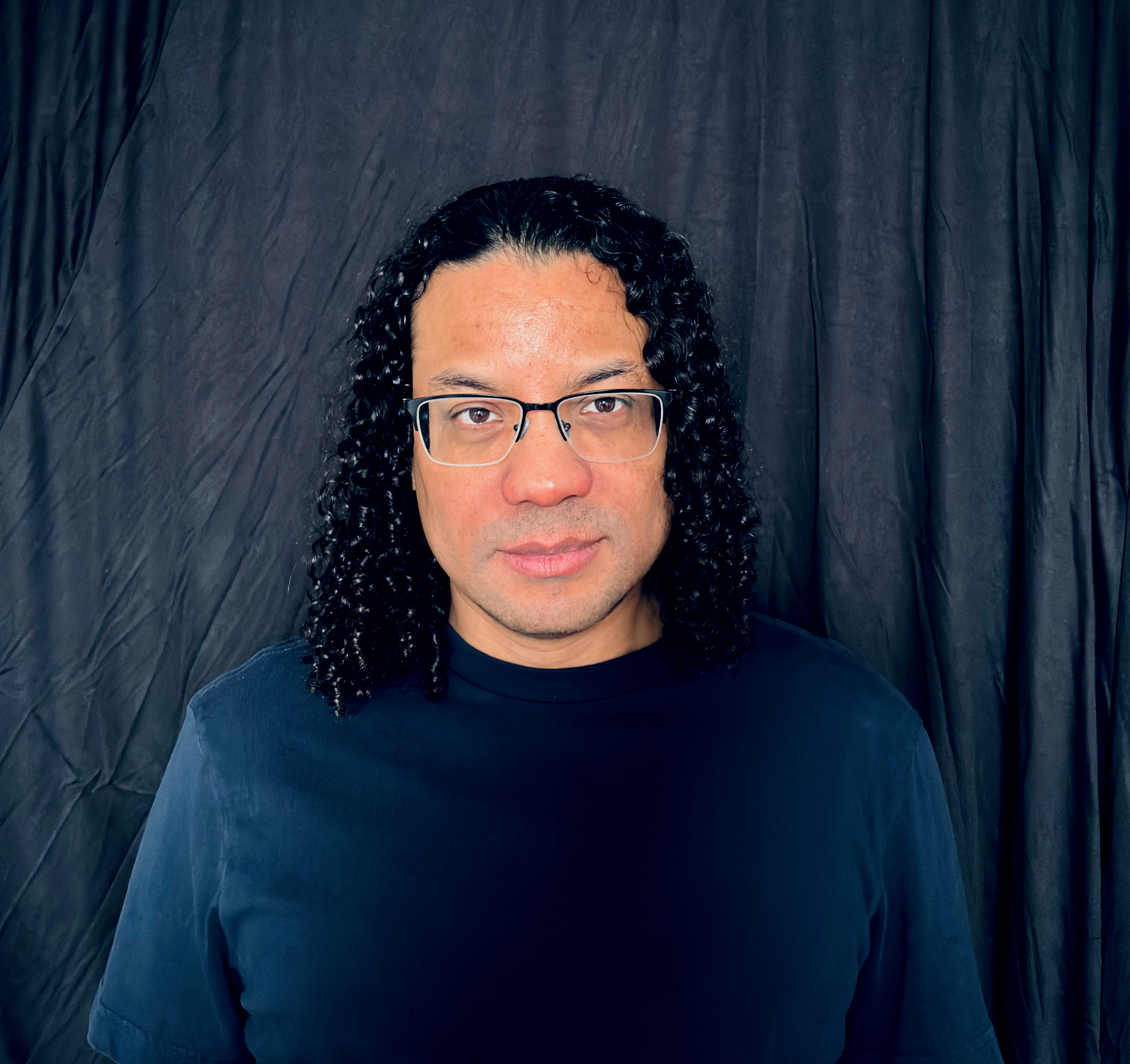
Kirk DeMatas is a Toronto-based multi-disciplinary artist, dancer, actor, poet, and the author of the collections Wordspeak and Conversations with Skeletons. In 2022, he incorporated poetry with original music for his first EP. His poetry also features in his music videos and the 2024 award-winning short film “Coffee, Black.”
Shapeshifter: Manifesting your poetry across mediums
Poetry is an ancient art form that started out as part of the oral tradition (i.e. Epic of Gilgamesh, 2100-1200 BCE) before eventually expanding into the written form we know today. Over the years, poetry has been reshaped to adapt to changing times and poets. Growth is inevitable.
I studied poetry as an undergrad. I learned the rules but quickly realized that writing in this way restricted my creativity. Poetry is an art form and as such, a poet should feel free to create authentically. As human beings, we are destined to grow as we adjust to the constant changes in life so it’s only natural that as poets our poetry should grow with us.
If you’re like me, you may find that you get bored writing in a certain way. If so, you may want to switch things up to keep it interesting.
Here are three methods I’ve used to change how I write and present my poetry:
1. Poetry as performance
Poets and artists ranging from Dr. Maya Angelou to Malcolm-Jamal Warner to Gil Scott-Heron consistently championed the use of spoken word to reach their audiences.
The now-closed Trane Studio (located at Bathurst, north of Bloor) served as my introduction to live spoken word. Trane was a performance space for artists of various disciplines, that also featured a unique form of stage support via its house band. Musicians from a drummer to a flautist sat onstage ready to assist everyone who stepped up to the mic. The experience of witnessing a poet share his life experience while the house band supported him like a chorus changed how I viewed the performance of poetry.
When I started sharing my poetry at Trane, the unpredictability of the live space encouraged me to adjust my words to flow with musical accompaniment. Performing my poetry allowed me to change how I shared my words, experimenting with extended pauses and adding breaks to let my poetry breathe. I found myself writing free verse and I eventually started testing out new pieces at Trane that would later appear in my first book Wordspeak. The challenge to write differently compelled me to think differently, which pushed me creatively.
2. Poetry and music
Poetry and music have existed in tandem for decades, especially in rap and hip hop. Lyrics are essentially poems and, in conjunction with contemporary music, poetry is granted an opportunity to reach a wider audience.
When I was preparing poems for inclusion in my second book Conversations with Skeletons
I wanted to try something different by including a companion cd with recorded versions of my poetry. I did not get to finish recording in time for publication but a decade later I revisited the idea. To commemorate the 10th anniversary of the release of the book, I spent four days recording poems as well as composing music that complimented the feeling and tone of my words. I eventually released “Conversations with Skeletons – The E.P.” on all digital and streaming platforms. As a lifelong fan of music, it was a thrill for me to be able to combine my poetry with music. As precursor to my film work, I also shot music videos. I created visual representations of my poetry, which allowed me to tap into my training as an actor.
3. Poetry and film
Poetry Film is a century’s old genre that showcases spoken word poetry with visuals and audio. Countless poets have experimented with poetry films over the past 100+ years from Lawrence Ferlinghetti’s 1968 film about the murder of Robert F. Kennedy “Assassination Raga” to Ian Kamau who paid tribute to Toronto’s Hip Hop scene in his 2020 spoken word short “We Went Out.”
My personal favourite, the 2010 Korean film simply titled “Poetry”, inspired me to venture into this genre in the early 2000s. My first experiment with Poetry Film came in the form of the “NO H8” poetry shorts – a series of five short videos featuring a recorded version of my poem also titled “NO H8” and inspired by the NO H8 Campaign against Proposition 8, which aimed to ban same-sex marriage in the state of California. Along with the recorded poem, I collaborated with a filmmaker friend who shot clips of various people with their mouths taped shut with only the message “NO H8” branded on their faces to convey their stance against Prop 8. Original music was also composed and included in the final shorts.
During the first year of the COVID pandemic, I wrote a poem and collaborated with a poet friend to write a script and shoot a poetry film. Previous experience of recording the “Conversations with Skeletons – E.P.” taught me that recording from the comfort of my home had its limitations so, I booked a studio to record the poem as well as all other vocals. To further enhance the mood, I collaborated with a musician who I hadn’t seen or performed with since Trane Studio. The musician wrote and recorded original music for our film. This project is currently in post-production.
Most recently, I wrote and recorded a poem that is included in its entirety in the award-winning short film “Coffee, Black”. Written and Directed by Bobby Schmidt, it’s currently playing in festivals across the U.S.
I believe in creating opportunities and finding new ways to share my work. Every time we take a chance on ourselves, we grow as poets, writers and artists.
Links
Author hub: https://linktr.ee/kirkdematas
Wordspeak: https://www.iuniverse.com/en/bookstore/bookdetails/125976-Wordspeak
Conversations with Skeletons: https://www.iuniverse.com/en/bookstore/bookdetails/407518-Conversations-with-Skeletons
YouTube: https://www.youtube.com/user/kirkspeak
Coffee, Black: https://www.imdb.com/title/tt34158879/?ref_=nm_ov_bio_lk
Leave a Reply