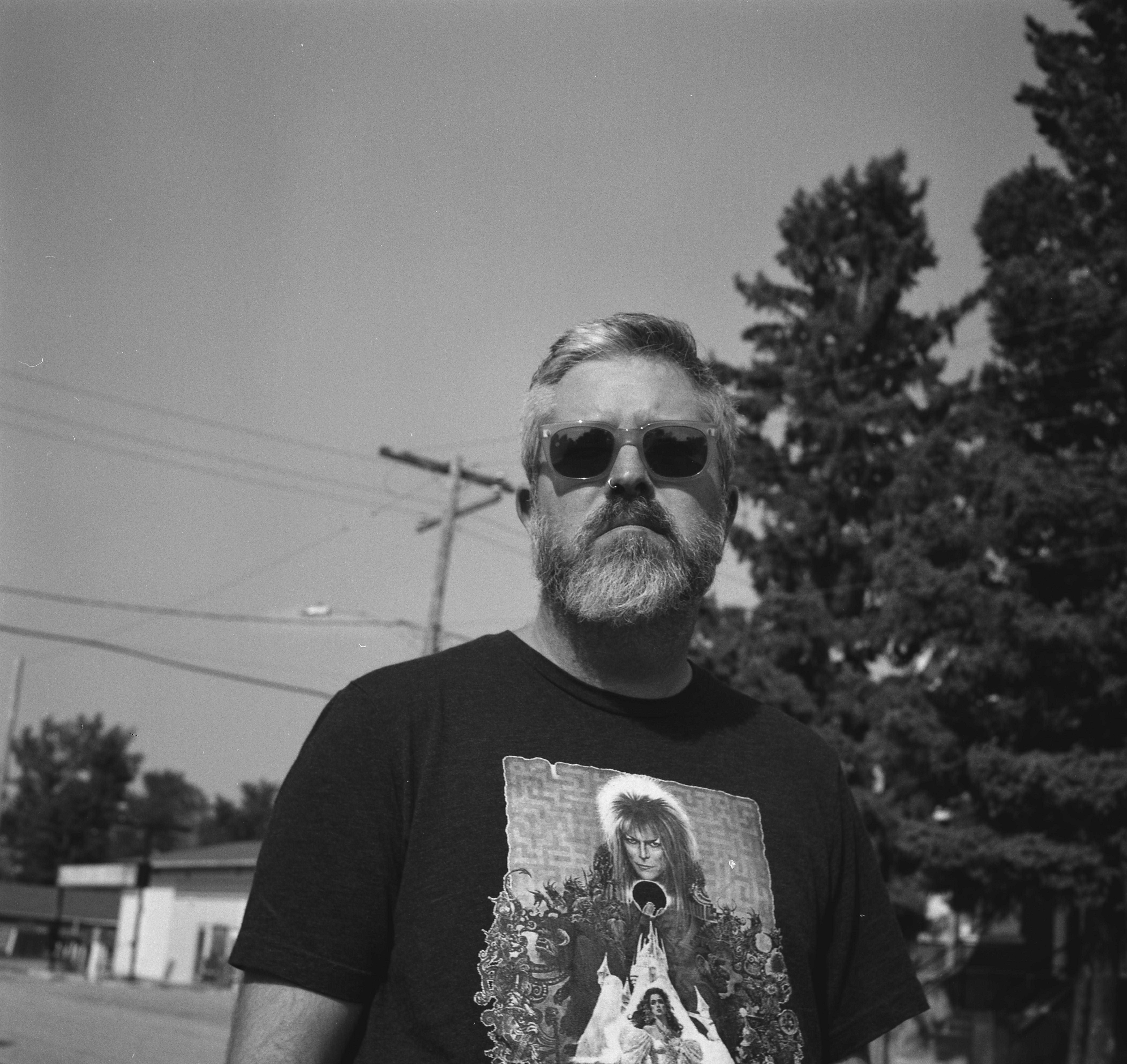
Jes Battis is the author of the award-winning fantasy novel The Winter Knight (ECW), as well as the Occult Special Investigator series (Penguin), and the Parallel Parks series (Penguin). They are a Canada Reads finalist, and their work has been shortlisted for the Lambda Literary Award, the Sunburst Award, and the Ralph Gustafson Poetry Prize. Their recent book of poems, I Hate Parties, won the Saskatchewan Book Award.
Queer and Trans Worldbuilding
I teach courses on fantasy worldbuilding, and students present fascinating and complex worlds during our workshop sessions. Many of them have been working on particular worlds since they first began to write, and you’d better believe they have the receipts to prove it: maps, religions, magic systems, dystopian technologies, histories, ecologies, warfare. They admire each other’s worlds, and offer sensitive feedback for how to make them come alive on the page.
What they aren’t always thinking as much about—and what we strive to address during the course—is finding connections between world and character. NK Jemisin, author of the award-winning Broken Earth trilogy, has said across multiple interviews that world and character need to be connected. Your character shouldn’t just be moving individually through a complex world. They should challenge the world, and vice versa. In her 2019 Wired talk on worldbuilding, she urges writers to ask: “What myths have been constructed to support or resist the power dynamics of this world?” Your protagonist is in a relationship with their world, and both are constantly re-shaping each other.
A lot of my own writing might be called queer and trans worldbuilding. My most recent novel, The Winter Knight, focused on queer and trans Arthurian knights. I was particularly interested in how the “minor” figures of Arthuriana were nearly always marginalized. How did they move through the world differently from someone like King Arthur? My forthcoming book, on the 80s cult-classic film Labyrinth, also focuses on Jim Henson’s worldbuilding as a kind of queer practice. His monstrous and marvelous characters allowed me to see a more queer and gender-fluid world as a child viewer, and I want to share that with a new generation of readers. World-building isn’t restricted to fiction, either. In my poetry collection I Hate Parties, the poems act as queer and anxious little worlds for readers to inhabit. They engage with setting through a perspective that’s often unraveling due to sensory overload, but they also shape spaces of queer and trans resistance. Maybe I’m trying to build a better party.
I’m always heartened, in workshop classes, when students encourage each other’s weirdness. Often, it’s the idea that a writer is most self-conscious about that becomes the most interesting crux of a piece. That part of their own writing voice that they can never quite shake off, because it’s so intimately a part of them. We talk about how so many fantastic and speculative worlds end up mirroring past or current systems of oppression. Why are we so obsessed with the European feudal system, or late-stage apocalyptic capitalism? Not just because we experience both residually or viscerally, but because we can name these things. We know them like we know ourselves. We’re forced to know them.
But what if we reach for wild, uncreated worlds, instead?
In his work on queer futures, Jose Esteban Muñoz argues that queerness is always on the horizon, always slightly beyond our comprehension. Our characters can live in that horizon, as well. If Ursula K. Le Guin was able to write about trans aliens in 1969, you’d better believe you don’t need to replicate an artificial gender binary in 2025.
We need to do concrete things, like supporting queer and trans writers during a time of renewed hostility towards our lives and bodies. That support can take a number of forms, ranging from a ko-fi payment to a full-scale “you can hide from ICE raids in my basement” scenario. But we need imaginative responses as well. In a world that is actively trying to erase trans people from public life, how might you, as a writer, think differently about your own experience of gender? How might you acknowledge the deep historical connections between transphobia and fascism, and the ways in which they support those power dynamics that Jemisin talks about? World-building can start from within. You know those uncomfortable thoughts that we experience when we think a little too hard about gender? They exist as a guard-rail, designed to preserve the systems they benefit.
Try pushing on them a little.
Try breaking them.
Now, let that story unfold on the page. Let that world explode in a wave of reckless possibility. Castles and starships are amazing, but they don’t need to be the same spaces that they we always read about. Imagine the queerest possible castle, moving through uncharted nebulae. Imagine the worlds you haven’t dared to express, the most peculiar, dangerous, powerful lives that your characters might inhabit.
Only you can build those worlds. And we need you to build them. Nobody has ever lived as you have, in this moment, in this precious body. The horizon is always just close enough to touch.
Links
Author site: www.jbattis.com
Poetry Collection: I Hate Parties
Novel: The Winter Knight
Creative Nonfiction: It’s Only Forever: Labyrinth
Leave a Reply